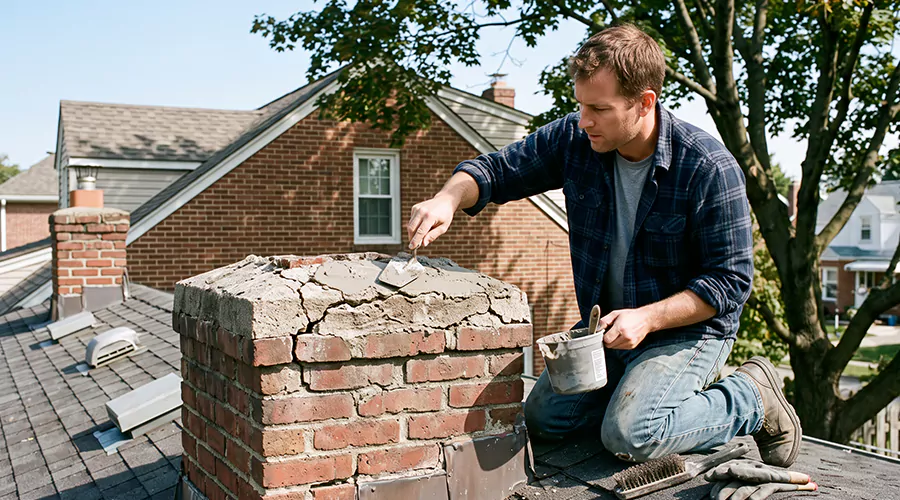
How to Repair a Cracked Chimney Crown
Learn how to repair a cracked chimney crown by cleaning cracks, applying suitable repair materials, sealing the surface, and protecting it from moisture.




Based on 500+ Reviews

Proudly American
Owned & Operated

A cracked chimney crown can allow water to enter the chimney structure and cause serious masonry damage over time. The chimney crown is designed to protect the top of a masonry chimney by directing rainwater away from the bricks and mortar joints. Proper chimney crown installation also helps create a durable barrier against moisture and protect the chimney from long-term water exposure.
When cracks develop, moisture can penetrate the crown and reach the chimney walls, leading to problems such as cracked bricks, deteriorated mortar, leaks, and structural damage.
Repairing a cracked chimney crown involves identifying the severity of the damage, preparing the surface, sealing or rebuilding damaged areas, and preventing future moisture problems.
A chimney crown is the protective surface located at the top of a masonry chimney. It covers the chimney opening and extends beyond the chimney walls to help move water away from the structure.
A properly designed chimney crown should:
The chimney crown works together with other components, including the chimney cap and flashing, to protect the chimney from weather damage.
Chimney crowns can crack for several reasons.
Common causes include:
Because chimney crowns are constantly exposed to outdoor conditions, small problems can gradually become larger cracks.
A damaged chimney crown may show several warning signs.
Common signs include:
Some crown cracks may be difficult to see from the ground, which is why regular chimney inspections are important.
Yes. A cracked chimney crown can allow water to enter the chimney system.
Once moisture enters through the crown, it can travel into:
Long-term moisture exposure can lead to:
Repairing cracks early helps prevent larger problems.
The repair method depends on the size and severity of the crack. Small cracks may require sealing, while larger damage may require resurfacing or rebuilding.
Before repairing the crown, inspect the entire chimney system.
The inspection should check:
The goal is to determine whether the crown can be repaired or needs replacement.
Before applying repair materials, the crown surface should be properly prepared.
Cleaning removes:
A clean surface helps repair materials bond properly.
Any weak or deteriorated areas should be removed before repair.
This may include:
Repair materials should be applied only to a stable surface.
Small cracks can often be repaired using appropriate crown repair materials.
The process generally includes:
Small crack repairs can help prevent water from entering the chimney structure.
If the crown surface has widespread cracking or deterioration, resurfacing may be needed.
Crown resurfacing involves applying a protective layer over the damaged surface.
Benefits include:
Resurfacing works best when the crown is still structurally sound.
A severely damaged chimney crown may need complete rebuilding.
Replacement may be necessary when:
A rebuilt crown should include:
A properly constructed crown provides better long-term protection.
Repairing the crown alone may not solve all moisture problems.
Other chimney components should also be checked.
| Component | Purpose |
|---|---|
| Chimney cap | Blocks rain and debris from entering |
| Flashing | Prevents water around roof connection |
| Masonry | Protects chimney structure |
Damaged components should be repaired to prevent future leaks.
After repairing the chimney crown, waterproofing may help protect the masonry.
A proper chimney waterproofing treatment can:
Waterproofing should not be used as a replacement for crown repair. Existing damage must be fixed first.
The correct repair method depends on the condition of the crown.
| Damage Level | Repair Method |
|---|---|
| Small cracks | Crack sealing |
| Surface deterioration | Crown resurfacing |
| Moderate damage | Partial repair |
| Severe damage | Crown replacement |
A chimney inspection can help determine the appropriate solution.
Some homeowners attempt DIY chimney crown repairs, but the process requires proper materials and safety precautions.
Challenges include:
DIY repairs may fail if:
Professional evaluation may be recommended for major cracks or repeated leaks.
The cost of chimney crown repair depends on:
| Repair Type | Typical Cost Factors |
|---|---|
| Crack repair | Size and number of cracks |
| Resurfacing | Crown condition and material |
| Partial rebuilding | Extent of damage |
| Full replacement | Chimney size and labor |
Repairing small cracks early is usually less expensive than repairing water damage caused by a failed crown.
The lifespan of a repaired chimney crown depends on:
Proper maintenance can help extend the life of the repaired crown.
Preventive maintenance can reduce the chance of future crown damage.
Helpful steps include:
Preventing moisture entry is one of the best ways to protect a chimney crown.
A chimney crown should be repaired when you notice:
Waiting too long can allow water to damage the entire chimney structure.
Repairing a cracked chimney crown involves inspecting the damage, cleaning the surface, repairing cracks, resurfacing damaged areas, or rebuilding the crown when necessary. A damaged chimney crown should not be ignored because it can allow water to enter the chimney system and cause expensive masonry problems. Regular inspections, timely repairs, and proper moisture protection help maintain the chimney crown and extend the life of the chimney. Keeping the chimney crown in good condition is one of the most effective ways to prevent water damage and protect the entire fireplace system.
Yes. Small cracks can often be sealed, while larger damage may require resurfacing or rebuilding.
Common causes include moisture, freeze-thaw cycles, temperature changes, poor construction, and aging materials.
Signs include visible cracks, crumbling edges, water leaks, and moisture inside the fireplace.
Yes. Cracks can allow water to enter the chimney and damage bricks, mortar, and interior areas.
Minor damage can often be repaired, but severely deteriorated crowns may need replacement.
Regular inspections, moisture protection, and repairing small cracks early can help prevent major crown damage.
Learn how to repair a cracked chimney crown by cleaning cracks, applying suitable repair materials, sealing the surface, and protecting it from moisture.
